← Home · Investigation

CPT Testing in Hartford CT — Cone Penetration Data Without Guesswork

Together, we solve the challenges of tomorrow.

LEARN MORE →

The most expensive mistake we see in Hartford is ordering a deep foundation program based solely on sparse SPT data from the 90s. The Connecticut River Valley has deposited layers of varved silt and clay that standard split spoon samplers smear right through, giving you a friction angle that looks fine on paper but fails under load. A CPT test eliminates that blind spot. We push a 15 cm² cone at 2 cm/sec through the glacial lake deposits and get continuous tip resistance, sleeve friction, and pore pressure every centimeter. No gaps. No disturbed samples. Just the real stratigraphy you need to size piles or evaluate settlement before the first excavator shows up in the North End.

In Hartford's varved clays, a CPT trace reveals more about foundation risk in 20 minutes than a week of rotary drilling and lab testing.

Our approach and scope

Hartford's downtown didn't just rise on brownstone—it sits on the post-glacial silts of Lake Hitchcock, which stretched from Rocky Hill to Vermont 15,000 years ago. That means the soil column under Main Street alternates between stiff overconsolidated clay and loose silty layers that can liquefy. Our CPT rig maps those transitions with precision. We correlate cone resistance directly to undrained shear strength using a site-specific Nkt factor, then cross-check with Atterberg limits on thin-wall samples taken exactly at the pore pressure dissipation depth. The result is a parameter set that reflects Hartford's actual glacial history, not a textbook curve. We also read temperature and inclination in real time—critical when you're pushing 60 feet down and the cone starts drifting near an old buried mill foundation.
CPT Testing in Hartford CT — Cone Penetration Data Without Guesswork
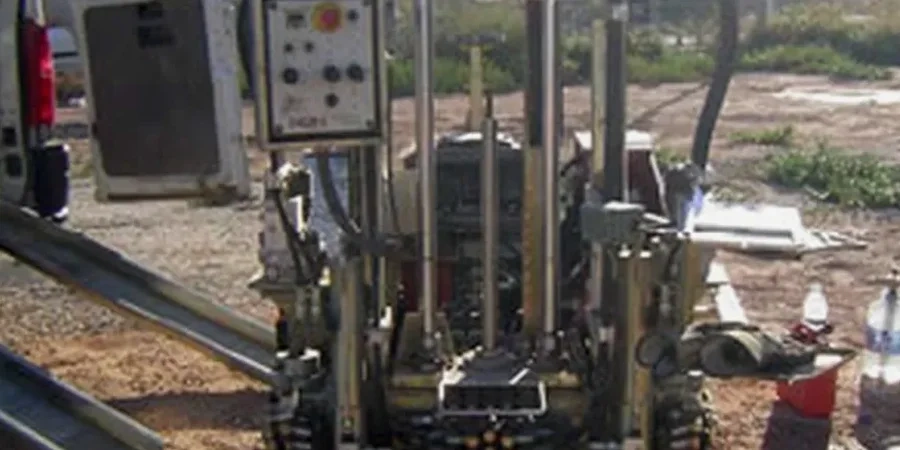
Technical reference image — Hartford Connecticut

Site-specific factors

We routinely encounter a scenario in the South Meadows and Brainard Airport area: the CPT refusal spike hits at 45 feet, right where the old lake bed transitions into dense basal till. An inexperienced operator might call refusal and stop. We don't. We read the pore pressure dissipation curve at that interface first—if it takes more than t50 of 30 minutes to drop 50%, you've got a perched water lens in a silt seam that will destabilize your open cut excavation. The risk isn't just hitting refusal; it's not recognizing that the refusal depth coincides with a drainage boundary. For deep excavations over 20 feet, we combine the CPT data with a slope stability analysis to model the undrained failure plane exactly where that silt lens appears on the log.

Need a geotechnical assessment?

Reply within 24h.

Email: contact@geotechnical-engineering.vip

Technical parameters

ParameterTypical value
Cone typePiezocone (CPTu) — 15 cm², 60° apex
Measured parametersqc, fs, u2, inclination, temperature
Penetration rate2.0 cm/sec ± 0.5 cm/sec (ASTM D5778)
Max depth capacityUp to 80 ft in Hartford clay; refusal in dense till
Data intervalContinuous at 1 cm vertical resolution
Soil classificationRobertson (1990) SBT charts, normalized
Reporting standardASTM D5778-20, with Nkt-calibrated Su profiles

Other technical services

01

Standard CPTu Profiling

Continuous cone penetration with pore pressure measurement to 80 ft depth. Includes corrected cone resistance, friction ratio, and Robertson soil classification charts. Ideal for foundation bearing capacity and settlement analysis.

02

Pore Pressure Dissipation Testing

Stopped-cone dissipation tests at specified depths to measure t50 and estimate coefficient of consolidation in Hartford's varved clays. Direct input for time-rate settlement predictions.

03

CPT-Based Liquefaction Screening

Cyclic resistance ratio evaluation using CPT tip resistance and sleeve friction per Boulanger & Idriss (2014) method. Critical for sites east of the Connecticut River within the FEMA liquefaction susceptibility zones.

Reference standards

ASTM D5778-20 — Standard Test Method for Electronic Friction Cone and Piezocone Penetration Testing of Soils, ASTM D6067 / D6067M-17 — Standard Practice for Using the Electronic Piezocone Penetrometer, ASCE 7-22 — Minimum Design Loads for Buildings and Other Structures, IBC 2021 — International Building Code, Chapter 18 Soils and Foundations

Quick answers

How much does a CPT test cost in Hartford?

Mobilization and testing typically range from US$180 to US$280 per hour depending on depth, site access, and whether you need dissipation tests. A single 60-foot profile with standard CPTu and one dissipation stop usually completes in half a day.

How deep can you push the CPT cone in Hartford's soils?

In the varved clay and silt deposits downtown, we routinely reach 70 to 80 feet before encountering refusal. In areas closer to the basal till, refusal may occur shallower, around 40 to 50 feet. We assess push capacity during the first 10 feet and adjust the rig reaction mass accordingly.

What's the difference between CPT and SPT for Hartford foundation design?

SPT gives you a blow count every 2.5 feet with disturbed samples. CPT gives you continuous tip resistance, sleeve friction, and pore pressure every centimeter. In Hartford's interbedded silts and clays, CPT detects thin drainage layers that an SPT spoon can miss entirely. For settlement-sensitive structures, we almost always recommend CPT.

Do you provide interpreted geotechnical parameters from CPT data?

Yes. Every report includes undrained shear strength calibrated with a site-specific Nkt factor, overconsolidation ratio from pore pressure response, constrained modulus for settlement calculations, and soil behavior type classification per Robertson (1990). We deliver the raw .COR file and a fully interpreted PDF log within two business days.
Location and service area

We serve projects in Hartford Connecticut and surrounding areas.

View larger map