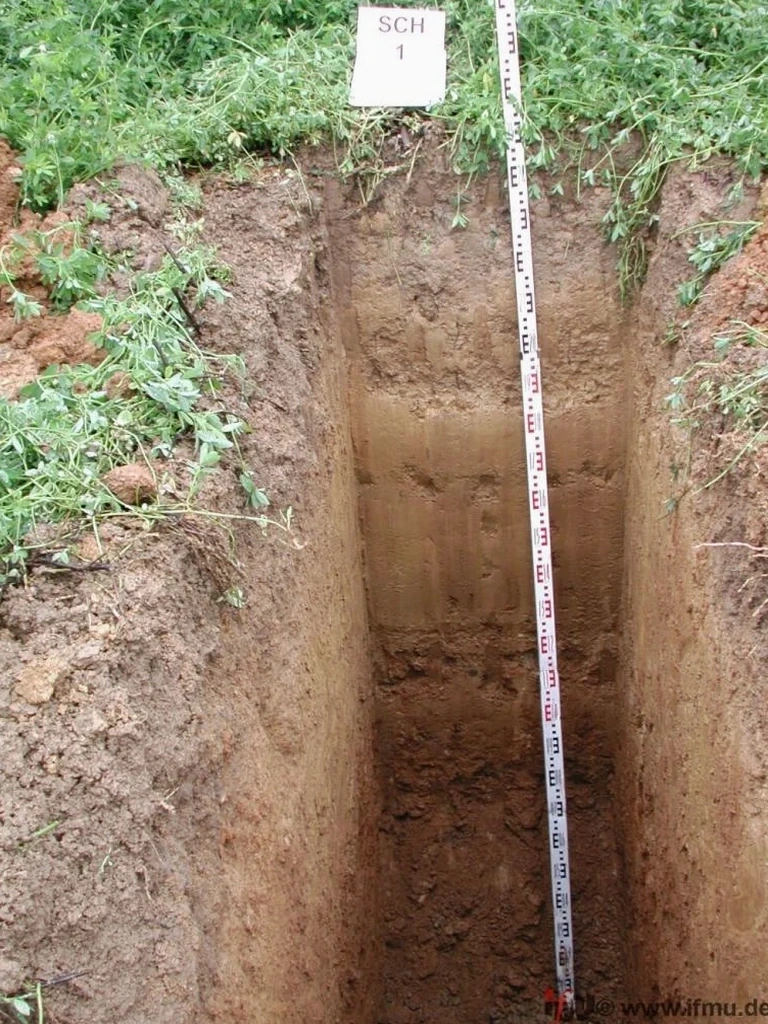
Hartford sits at just 59 feet above sea level on the Connecticut River floodplain. That low elevation means groundwater often shows up within the first six feet of excavation. We opened three test pits off Albany Avenue last week and hit silt with organics at four feet. The developer had assumed sand. Our exploratory test pit work in Hartford CT directly changes foundation decisions. We log the strata, photograph the sidewalls, and pull undisturbed samples for the lab. When the soil profile tells a different story than the borings, the test pit gives you the visual proof. For deeper refusal verification we pair this with SPT drilling to get N-values below the pit floor.
One open pit wall tells more about Hartford's glacial lake deposits than ten split-spoon samples from a boring.
Quick answers
What does an exploratory test pit in Hartford CT typically cost?
For a standard test pit excavated to 8-10 feet with visual logging, photography, and sampling, expect between $570 and $760. The final number depends on access, depth, and whether we need traffic control or a vacuum excavator near utilities.
How deep can you safely excavate a test pit?
We routinely go to 12 feet with proper benching or hydraulic shoring. Beyond that, OSHA requires engineered shoring design. In Hartford's silty soils, we never send a person into an unshored pit deeper than five feet.
What information does a test pit provide that a boring cannot?
A test pit exposes a continuous vertical face. You see stratification, lensing, fractures, root penetration, and fill boundaries directly. A boring gives you a disturbed sample every few feet. The test pit shows what happens between those intervals.
How long does a test pit stay open for inspection?
We typically keep the pit open for two to four hours for logging and sampling. If the geotechnical engineer or building official needs more time, we can schedule an extended open period with shoring, tarping, and dewatering as needed.