On a recent project near the Park River, a standard boring log suggested one site class, but the MASW survey told us something different. The Vs profile showed a stiff till layer at 60 feet that the driller had barely noted. That changed the seismic design category entirely, saving the client a costly over-design. In Hartford, the subsurface is rarely straightforward. We encounter everything from dense glacial till to soft lacustrine clays and historic fill, often within the same city block. A seismic refraction line might help map bedrock depth, but to get the VS30 value that ASCE 7-22 actually requires, you need a direct shear wave velocity measurement. We run active and passive MASW arrays on tight urban lots, parking lots, and brownfield sites across the capital region without the need for borings.
A single MASW line gives us the VS30 for IBC site classification, but more importantly, it reveals the velocity contrasts that control amplification at your specific site.
Site-specific factors
ASCE 7-22 Section 20.1 requires a site class for every project, and using the default Site Class D when actual conditions are softer or harder is a gamble. In downtown Hartford, where the glacial lake clays can push a site into Site Class E, a default assumption means underestimating seismic loads. We have seen projects where the mapped NEHRP class did not match the measured VS30 by a full category. The IBC 2021 ties the seismic design coefficients directly to the site class; getting it wrong cascades into foundation sizes, lateral system demands, and ultimately construction cost. Our approach is straightforward: we deploy the MASW line as close to the planned building footprint as possible, process the data the same day, and issue a signed report that stands up to peer review by the local building official or a third-party geotechnical reviewer.
Quick answers
How much does a MASW / VS30 survey cost in Hartford?
A standard active MASW survey with one or two lines for VS30 determination typically runs between US$1,620 and US$2,790. The final cost depends on site access, the number of array deployments, and whether passive recording is needed to reach deeper targets. We provide a firm quote after a brief site walk or review of your project plans.
Can you run a MASW survey on a paved parking lot?
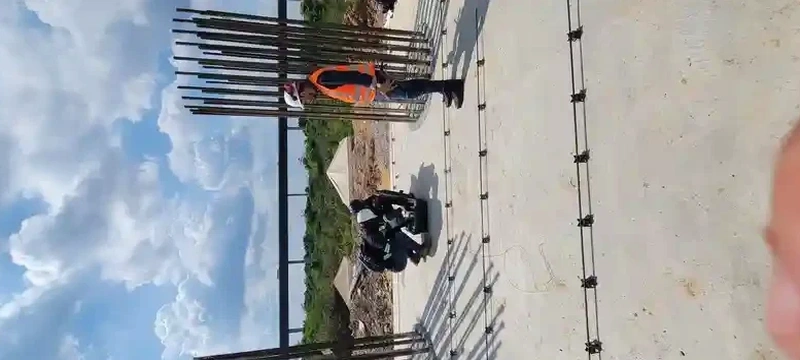
Yes. For asphalt or concrete surfaces, we bolt the geophones to the pavement or use a thin sand layer for coupling. The high-frequency data quality is actually better on hard surfaces, though we lose some low-frequency passive signal. In downtown Hartford, most of our surveys are on paved lots.
How does MASW compare to downhole or crosshole seismic testing?
MASW is non-invasive, faster, and costs a fraction of a borehole seismic test. It measures an average Vs over the array length rather than at a point. For VS30 and site class, this average is exactly what the code requires. Downhole testing gives higher resolution at specific depths but requires a cased borehole, which adds drilling cost and time.
What is the difference between active and passive MASW?
Active MASW uses a sledgehammer source and a linear geophone spread; it resolves the upper 20 to 30 meters well. Passive MASW records ambient noise with a 2D array and captures lower frequencies, so it can resolve deeper layers. We often combine both to get a Vs profile from the surface down to 40 or 50 meters, which is critical in Hartford where the glacial lake clays extend deep.